Cutting our Claude API bill 10x with prompt caching
What actually gets cached, and how we measured $0.016/conversation in production.
1 min read#ai#claude-api#cost
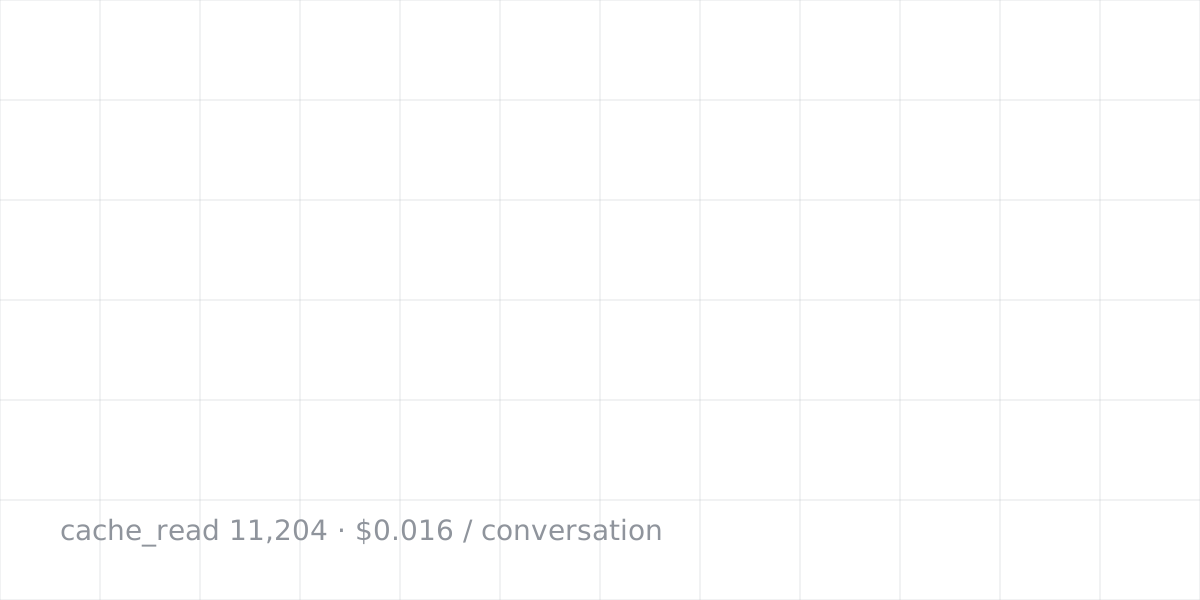
Our AI support assistant at SealMyIdea runs a system prompt, a full knowledge base, and 13 tool definitions on every single turn of every conversation. Without caching, that's thousands of tokens re-billed on every message — even when nothing in the context has changed.
What actually gets cached
Anthropic's prompt caching lets you mark a prefix of the request as cacheable. We cache three things, in this order:
- The system prompt (rules, tone, escalation policy)
- The knowledge base snapshot (39 articles, serialized)
- The 13 tool definitions (JSON Schema, converted from Zod)
Only the user's actual message and the running conversation history sit outside the cached prefix.
The TTL tradeoff
We use a 1-hour cache TTL. Shorter TTLs mean more cache misses during quiet periods; longer TTLs risk serving a stale knowledge base after an admin edits an article — so every knowledge-base write explicitly invalidates the cache instead of waiting for TTL expiry.
The number that mattered
Across 578 measured production conversations, blended cost landed at $0.016 per conversation — roughly a 10x reduction from the uncached baseline. The lesson: prompt caching pays off fastest when your system prompt and tools are large relative to the actual user message, which is almost always true for a tool-calling agent.